
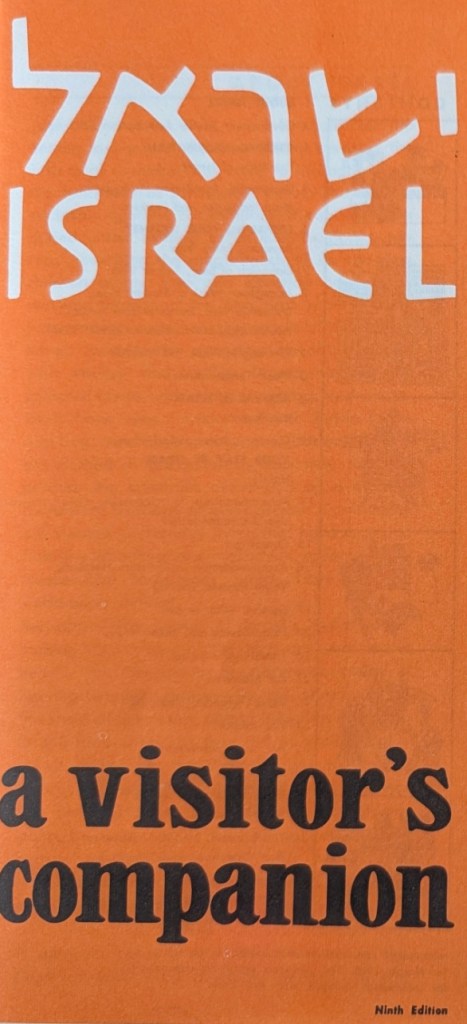
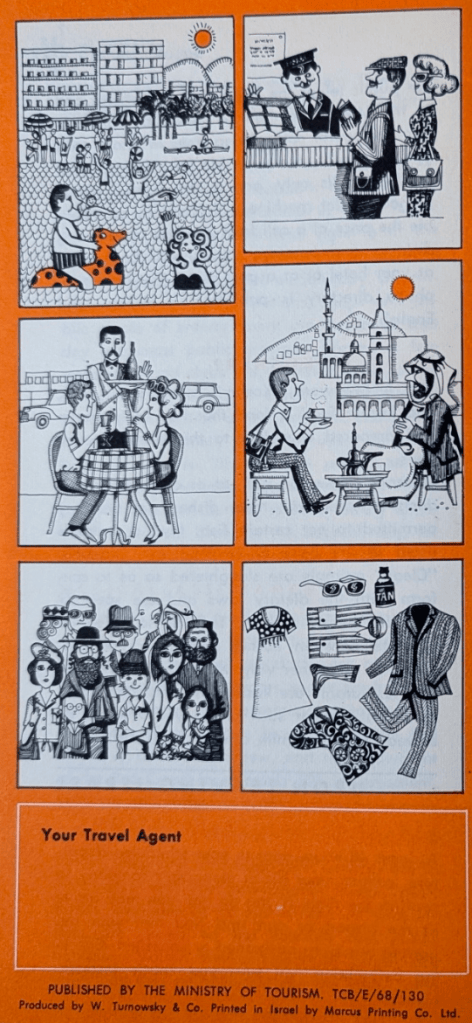
Although I’m not sure what to do with them yet, digging around for things in the “unprocessed piles” that I might be able to process, I came across some personal member collections.
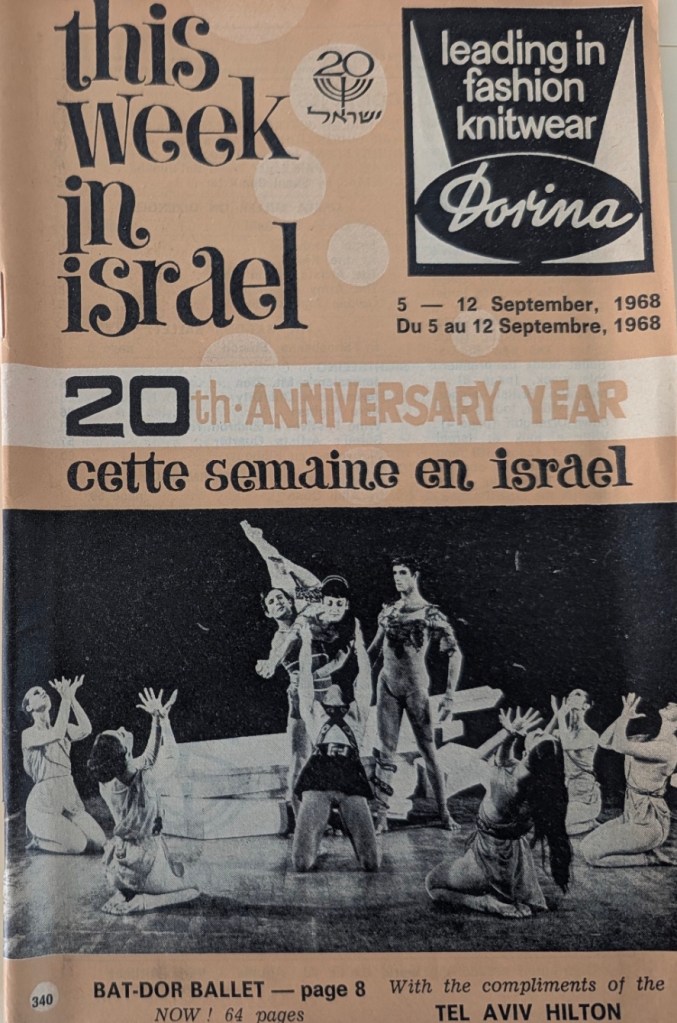
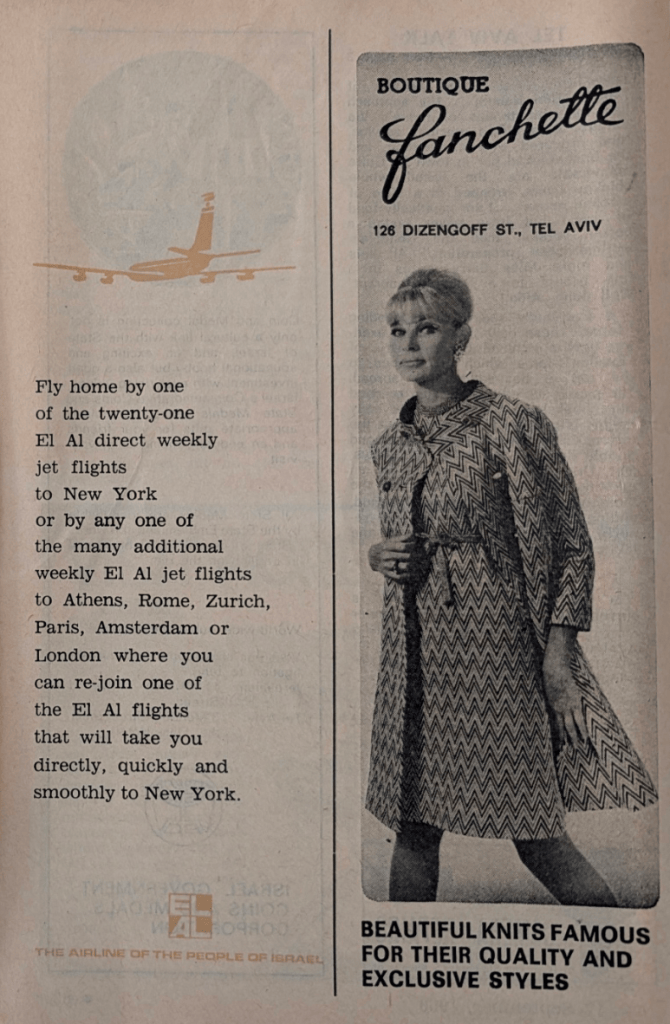
I don’t yet know how to handle these. This little archive is localized to Jewish presence in this city, so a lot of the things in here are only pertinent because they came from someone here. These pamphlets were in one member collection. They’re from 1968. One is from El Al airlines, which is still in business, and the other is a “what to do in Israel” guide that might as well be “what to do in San Francisco.”
I also found a booklet just hanging out loose on a table. It’s slightly bigger than my palm, in both English and French, and it’s a collection of stories and actual photographs of the horrors of the Holocaust, produced sometime in the 1960s. I had to take a walk after looking at it. Humans are horrible to each other, and all settler colonialists are traumatized people. Minor digression, but I still don’t know what to do with this. No one seems to know where it came from, so I can’t connect it to the local Jewish community.
The pamphlet is one of many interesting old things I’ve found in there — such as old, old portraits in handcarved wood frames (sent out to the entire congregation to identify, without success), and a pre-publication copy of Emmanuel Mané-Katz’s Douze Lithographies pour Stempeniou de Cholem Aleikhem (Twelve Lithographs for Stempeniou by Sholem Aleikhem), published in January 1966 that I don’t know what to do with. The photos are small, so they’re simply an item of interest on display as “something old and Jewish in the archives.” The portfolio, unfortunately, isn’t convenient to display anywhere (it’s literally “giant format” at 27.5 x 21 inches) and no one visiting an archive that houses Jewish presence in the Triad area of North Carolina is going to come looking for this. If I knew where it came from, maybe it would say something appropriate here, but I don’t.
So, the booklet sits on the table. The portfolio leans against a wall. But in a congregant’s personal collection, El Al tourist pamphlets from the same era tell us a fuller story of someone who lived here. He was a modern Jewish man, an affluent one who could fly to the other side of the planet to visit a country that, at the time, was only twenty years old.
 The Long Shelf Life
Leave a comment